
Confidence in preschool doesn’t always present as your child walking into class without hesitation. Sometimes it is raising a hand, trying again, or making new friends. Private preschools and well-designed preschool programs can help create confidence-building moments in everyday activities. Small moments in the classroom can be turned into practice for independence, communication, and problem-solving in a setting they feel safe with added supports.
Responsive Interactions
Children gain confidence when their words, choices, and ideas matter. They pay attention to how those around them respond to their behavior. When educators listen, answer questions, acknowledge ideas, and continue conversations, children learn that what they communicate has value. These learning moments don’t require much time. The response connects to what is being said rather than brushing past it. Responsive back-and-forth interactions encourage communication development and help strengthen confidence in preschool and beyond.
Get On Their Level
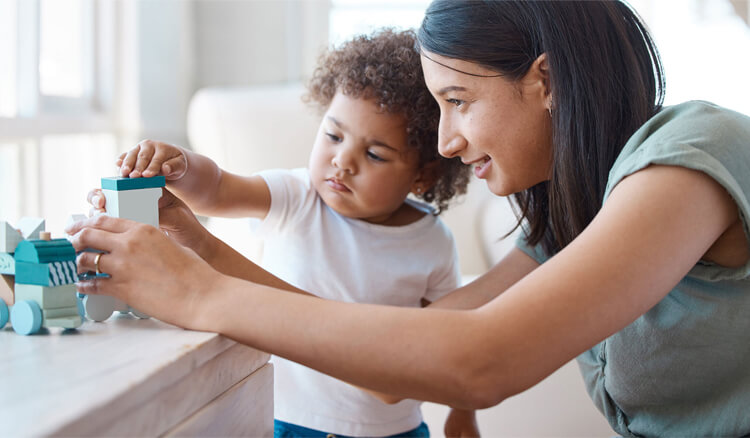
Physical communication can affect how comfortable your child may feel during an interaction. When educators and adults stand up straight, this can be intimidating to small children. Sitting or kneeling closer to your child’s eye level can make conversations feel less intimidating and more focused. Educators can gain useful information by getting down to the ground. They can notice expressions, gestures, and other nonverbal cues. This is particularly useful for children who are still in the early stages of communication development. Allowing time for them to speak also supports confidence building. Sometimes children need a little extra time to think through what they want to say. Not making them feel rushed can help build confidence simply because they can find their own words.
Use Buildable Language
Praise becomes more valuable when children understand what they are being praised for. Focusing on what your child did, rather than labeling them as naturally smart or talented, keeps the focus on developing skills. Language that leaves room for improvement can also encourage your child to work rather than to determine that a task is something they cannot do.
Encourage Choice and Independence
Young children need room to choose and decide for themselves. Preschool is the perfect setting, with plenty of room for autonomy without the expectation of managing more responsibility than they can handle. Educators offer choices about activities, books, or the order in which tasks are completed. These opportunities allow them to use their own judgment and build confidence through independence. Teachers are available when needed but offer the space necessary to make decisions that help young minds grow.
Dealing With Common Barriers
Confidence isn’t expressed the same in every child. Some are naturally talkative, while others require space before participating. Language delays, new routines, separation anxiety, or difficulty regulating emotions can also influence a child’s confidence in the classroom. Teachers need to adjust their approach to individual needs by allowing more time for responses, offering additional support, and providing more practice opportunities.
Confidence Beyond Preschool
Preschool offers repeated opportunities to practice skills that help build confidence while they’re still learning what they’re capable of. Over time, they gain more assurance to participate and rely on their own abilities. Confidence isn’t attained by removing every barrier or praising everything your child does. It is gained when they feel heard, are given helpful feedback, allowed to make appropriate choices, and are given enough support to keep trying without taking away the challenge. A quality preschool program is designed to provide many opportunities for growth across all areas throughout the day.


