
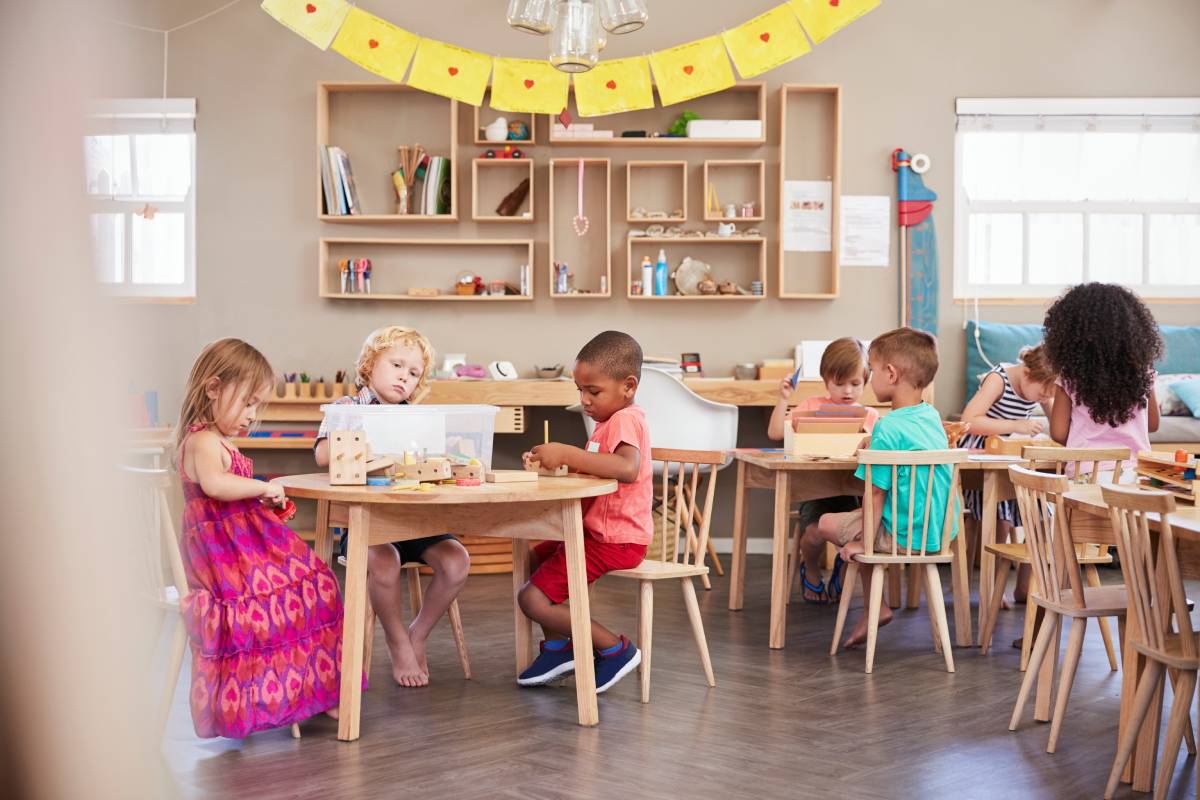
A common factor many parents consider when comparing private preschools is class size. Smaller classrooms do have their benefits, but they do not inherently equate to quality. Fewer students present more opportunity for teachers to recognize individual strengths, respond to difficulties, and adapt activities to children’s developmental needs. Better learning occurs when a preschool program prioritizes manageable class sizes, skilled educators, thoughtful instruction, and meaningful relationship-building.
Opportunities for One-on-One
Not all children learn the same, and smaller class sizes often make it easier for teachers to spend the time necessary to get to know their students. This is one of the clearest benefits. In a large group, a teacher’s attention is often pulled in many directions at once. Often, this means the quieter children, in particular, can go a whole day without a single one-on-one interaction. Smaller settings allow educators to notice when a child is struggling, who is ready for more challenging work, and who is resistant to group play. Being able to make adjustments in real-time is how real learning happens.
Behavior and Emotional Regulation
Preschoolers are still learning how to appropriately manage intense emotions; a smaller classroom gives teachers more range to walk through a big feeling instead of managing it. Teachers learn the triggers of their students and what makes conflict more likely, giving them the ability to recognize and intervene proactively. Fewer children also mean less noise and stimulation, resulting in fewer behaviors because children aren’t as easily overwhelmed. Smaller classrooms provide an appropriate setup that often leads to fewer disruptions and a calmer atmosphere.
Why Smaller Classes Don’t Automatically Mean Better Learning
Class size is certainly not the only thing worth evaluating. A well-trained educator managing a slightly larger group can create a much higher-quality learning experience than an inexperienced educator in a small room. Curriculum quality, teacher turnover, and how a program is structured determine quality equally as much as student-to-teacher ratio.
What to Consider When Touring
Numbers only tell part of the story, so touring while class is in session is always beneficial. Pay attention to how many kids a teacher is actively engaging with at once and how many are drifting unsupervised. Ask about the program’s policy on class size, as it may differ from what is advertised. Ask how the program addresses children who are struggling, socially or academically, as that will be a better indicator of a small class than the number alone. Talk to staff about teacher experience and retention. These can tell you a lot about a program. Don’t be afraid to ask questions; if something stands out, say something. The more knowledge you gain, the better your understanding of the quality of the program for what it is, not what it claims to be.
The Importance of Class Size
Smaller classrooms offer teachers more room to recognize, adjust, and teach. This often presents across social skills, emotional regulation, and how quickly gaps are discovered. It is a real advantage, but if it is the only advantage, you may want to reconsider. A quality learning environment prioritizes many small factors instead of dramatizing the importance of a single one. Each piece enables the whole picture to be witnessed. Teacher quality, ratio, and how a program structures the day all impact the quality of learning and should be taken into consideration as well.
Schedule a tour of our local preschool program to gain insight into our approach to learning and producing better outcomes for our students.


