
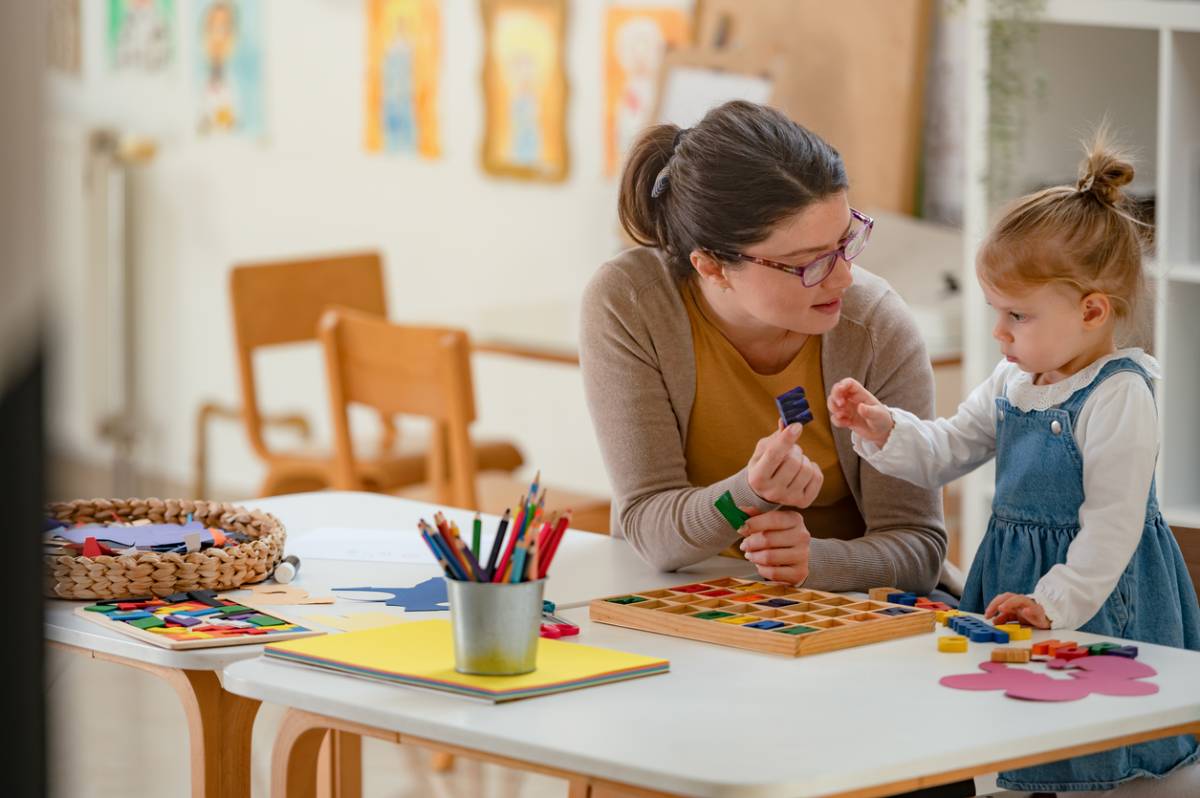
When the term “individualized attention” is used in a preschool setting, it typically refers to fostering a relationship between a teacher and student. In fact, teachers who provide emotional support not only create a welcoming atmosphere but also foster strong relationships with students and provide individualized attention for each child.
One of the primary beliefs of the private preschool teaching philosophy is maintaining a low student-to-teacher ratio. This allows educators to focus on each child individually, acknowledging each student’s strengths and weaknesses.
The Importance of Individualized Attention
Individualized attention in the classroom allows teachers to identify learning styles, learning achievements, and learning feedback. Children taught in small class sizes receive specialized attention that other kids may not in large public school classrooms. This focus on individualism allows children to flourish with their own personalities, hobbies, and skills. A child’s unique needs can be more easily met in a small classroom than in a larger one with many students.
Receiving individualized attention in a safe and stimulating environment requires teachers to adhere to certain guidelines, including being approachable, skilled, and patient. Strict protocols are put into place to verify emergency preparedness. In addition, a well-rounded curriculum incorporates activities for children. These activities include emotional, cognitive, and physical development.
Individualized Attention Examples
Individualized attention can focus on autonomy support and encouragement in one-on-one settings. Additionally, feedback allows children to make meaningful choices. Children are placed in an environment where they feel secure enough to take risks, form bonds, and engage in learning.
Children need to experience and engage with meaningful and appropriate self-regulatory challenges as part of tailored programs. Individualized attention examples include the following:
- Small class sizes
- Tailored teaching
- Customized pacing
- Skill building
- Emotional support
- Accommodating learning styles
- Self-regulation development
The above examples are excellent ways for children to find joy at school, acquire social skills, and experience a sense of competence in everyday activities. As for self-regulation, this broad concept can predict outcomes across the lifespan. For instance, self-regulation in pre-school is positively associated with school engagement, academic performance, and social competency.
Between the ages of three and seven, children follow different growth trajectories. In fact, there are three main elements to self-regulation. First, self-regulation includes self-selected standards or goals. Secondly, the act of monitoring, or comparing behavior to the current emotional state, is important. The last part of self-regulation includes the ability to operate. Positive actions are identified and enacted to promote self-esteem in kids.
Benefits of Individualized Attention
Individualized learning can nurture an infant’s curiosity and guide preschoolers’ readiness for school. Since each child is on their own journey, educators must work closely with students to help them develop the skills needed at every age. Tailored programs can ensure a child discovers, explores, and grows during their time at preschool.
To help offer individualized attention, teachers can provide:
- Healthy lifestyle habits
- Social skill development
- Competence and independence
- Curiosity and exploration
When a child attends a private school, they can receive individualized attention from small class sizes and a low teacher-to-student ratio. While public schools can shift their focus to business concerns rather than their students, private schools offer intensive support and attention for your child.
Consider Firehouse Preschool
At Firehouse Preschool, we focus on your child’s love of learning. We provide four unique programs for different developmental age groups. Your child may take part in a prekindergarten, preschool, toddler, or infant program.
Consider private preschools instead of public school options. With us, your child will receive the care they need through small class sizes and individualized attention. Additionally, focus is placed on personal growth over pressure. Open communication with parents and educators allows children to receive the utmost care. Contact us today to learn more.


