
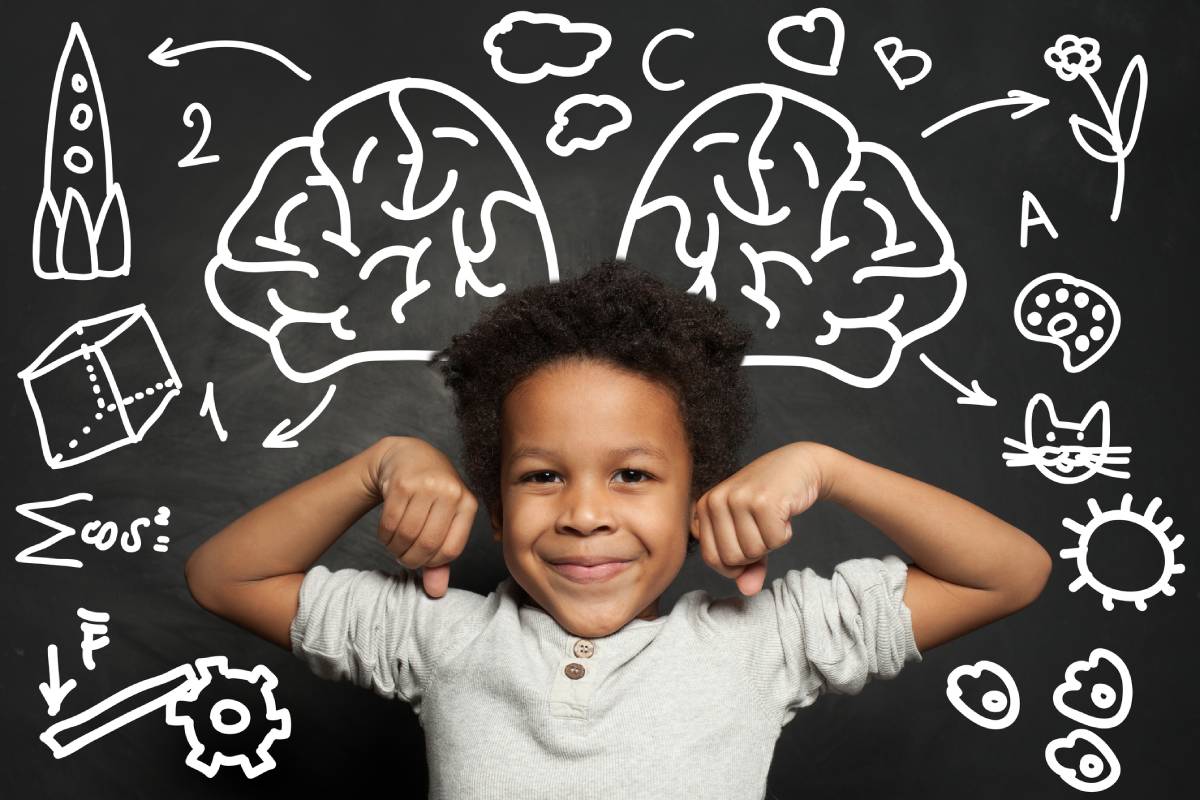
The most rapid brain growth occurs in the early years of life. The first six years are where a great deal of skill acquisition occurs. Many preschools take advantage of this crucial time to help children develop in ways that lead to the greatest success. They design their childhood education philosophy to help young minds make the most of their learning potential during a time when their brains are growing most rapidly. These years are spent learning language, to read, solve problems, and develop critical social skills. The proper education can put your child in the best position for success; it only makes sense that parents seek appropriate preschool.
Brain Development in the First Six Years
Your brain is the control center for every part of who you are and what you do. Explosive brain growth occurs in the first six years, with crucial architecture causing the brain to reach 90% of its adult size by age five. During these early years, the brain forms millions of connections, called synapses. Exposure to sounds, sights, touches, or instances of new experiences, the more connections the brain builds. Through experience, children develop stronger brains.
This is the key to why young children retain information so rapidly. The early years have a highly significant impact on the strength of their cognitive foundation. The brain of young children is comparable to wet cement. As the brain, or wet cement, hardens over time, anything pressed in early enough stays there. That isn’t to say learning and skill acquisition are impossible after the early years, just that it is the prime time for cognitive development and your best chance at getting information to stick for the long term.
Key Skills Children Learn Early
Language and communication skills are rapidly growing. Babies babble, then speak their first words, and before too long, they have figured out how to structure full sentences. They learn to understand information around them from the very start and use it to build on.
Social and emotional skills develop when interacting with others, while experience prompts emotional regulation. They begin to gain a more comprehensive understanding of emotions.
Problem-solving and thinking skills grow when they are required to think for themselves and figure things out. The relationship between cause and effect is increasingly well understood. And through simple activities and toys, they learn how to solve puzzles and think to find answers to their questions.
Play in Early Learning
Play is the most powerful learning tool there is. During play, information is continuously being processed, categorized, and retained. Play encourages creativity to try new ideas without fear of being wrong or ridiculed. This allows freedom of expression and builds self-confidence. Confident children become confident, competent adults.
Long-Term Benefits of Quality Early Education
Quality early education offers immeasurable benefits that last a lifetime. Research shows that children who attend quality preschools achieve greater success and better grades. Evidence also suggests that a good early education helps children acquire skills more quickly, perform better on tests, and be more likely to complete high school. During the preschool years, children are learning to build relationships, handle problems, and work with others. Additionally, when children have fun learning early on, they remain curious and excited about new experiences and knowledge, setting the stage for a lifelong love of learning. Every parent wants to give their child every advantage they can, and one of the best ways to do that early on is through quality early education.
Talk to an experienced educator about how our curriculum aligns with your family’s goals.


